
Ten years ago, a swimming pool in a British garden was something you noticed precisely because it was unusual. It marked the house out, the way a tennis court or a home cinema room did: impressive, slightly unexpected, and clearly the result of serious money. That perception has shifted faster than most people in the industry anticipated, and the numbers behind that shift are worth paying attention to.
The change did not happen gradually. It happened in roughly eighteen months between 2020 and 2021, and it left the residential pool sector in the UK looking structurally different on the other side.
From Luxury to Lifestyle: How the UK Pool Market Changed
When the first lockdown arrived in March 2020, homeowners across the UK began looking at their gardens differently. Travel was off the table. Hospitality was closed. Holidays abroad, weekend breaks, even visits to public leisure facilities disappeared overnight. The garden stopped being the place you walked through to get to the car and became, for millions of households, the main venue for rest, exercise, and family time.
Residential pool enquiries surged from 2020 onwards, and the staycation dynamic was the primary driver. Homeowners who had previously spent ten or fifteen thousand pounds a year on foreign holidays started asking a different question: what could that same budget, redirected into a property, actually build? A well-specified composite pool with heating, an enclosure, and quality filtration sits in a price bracket that, when measured against a decade of holiday spending, starts to look extremely reasonable.
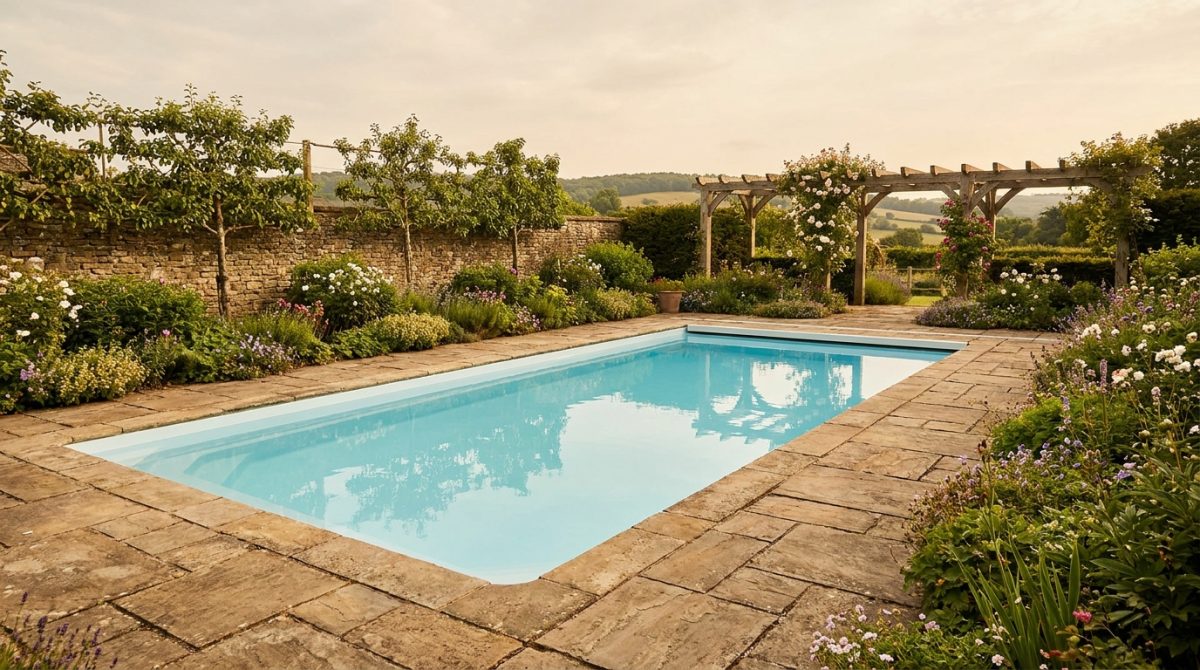
The broader market data supports what pool retailers across the country experienced on the ground. Analysts at Technavio and Market Research Future both identify Europe, including the UK, as a key growth region within a global swimming pool market projected to reach multi-billion dollar valuations by 2035. That is not a marginal uptick. It reflects a sustained redirection of consumer spending toward the home as a long-term leisure asset.
The attitudinal shift is just as significant as the sales numbers. According to Nielsen data cited by market researchers, over 70% of homeowners in affluent European regions now view pools as symbols of luxury and relaxation. That figure matters because it tells you something about expectations, not just purchases. When a majority of people in a given demographic see a pool as a reasonable marker of a well-appointed home, the market expands well beyond the group who are actively buying. It reaches the group who are planning to buy, or who factor a pool into their assessment of what a premium property should offer.
The UK was always slightly behind continental Europe on this curve. The climate argument, the planning uncertainty, the perception that pools were difficult and expensive to maintain: all of these acted as friction points that kept residential pool ownership relatively niche even among wealthy homeowners. What the pandemic did was remove the psychological barrier more decisively than any marketing campaign could have. When you cannot travel and your garden is the only outdoor space available to you, a pool stops being an indulgence and starts being a practical investment in your quality of life.
Pools are no longer aspirational oddities in the premium residential market. In the Home Counties, Surrey, Cheshire, and parts of the South West, they are becoming expected features of high-specification new builds and renovation projects alike. Estate agents report that buyers in these areas increasingly ask about pool installation potential when viewing properties without one, rather than treating an existing pool as a bonus. That is a meaningful change in market psychology, and it sets the trajectory for everything that follows.
What Murcia Can Teach British Homeowners About Pool Culture
Murcia, the autonomous region in south-eastern Spain, has one of the highest densities of private residential swimming pools anywhere in Europe. Demand there has continued to grow despite economic headwinds, rising energy costs, and periodic water scarcity debates. What makes Murcia a useful reference point is not the sunshine. It is the cultural positioning of the pool.
In Murcia, and across southern Europe more broadly, homeowners do not treat a pool as a luxury add-on they might consider once everything else is sorted. They treat it as infrastructure. It sits alongside the kitchen and the bathroom in the hierarchy of essential home features, budgeted for during construction or early renovation rather than added as an afterthought when finances allow. That normalisation took decades to establish, but it produced a market where pool ownership rates are dramatically higher than in the UK, and where the idea of a family home without a pool feels incomplete rather than simply modest.
British homeowners sometimes dismiss this comparison on climate grounds. Murcia averages over 300 days of sunshine per year. The argument goes that what works in south-eastern Spain simply does not translate to Berkshire or Cheshire. That argument has weakened considerably in the past decade, and it is close to obsolete now.
Advances in pool enclosure technology mean a well-specified residential pool in the UK can be usable for ten to eleven months of the year with the right cover and heating setup. Heat pump technology has made warming a pool to comfortable temperatures far less expensive than it was even five years ago. The notion that a British pool sits under a tarpaulin from September to May is an outdated picture that no longer reflects what modern pool ownership actually looks like.
Australia provides a useful parallel. The Australian climate varies significantly, with parts of the country experiencing temperatures that are not dramatically warmer than southern England in summer. Yet fiberglass residential pool sales in Australia have surged, driven partly by product quality and partly by a cultural shift toward outdoor living as a year-round priority. The research confirms it: the fiberglass inground pool market is projected to reach $16.5 billion globally, growing at a 3% CAGR, with residential applications accounting for the dominant share of revenue. Variable climates do not suppress demand when the right products exist to address them.
The deeper lesson from Murcia is about decision-making frameworks. Southern European homeowners who treat pools as infrastructure make better long-term decisions about them. They research materials properly, they budget for quality rather than lowest initial cost, and they think about maintenance and longevity from the start. British buyers who adopt that same mindset, rather than approaching a pool as a discretionary luxury to be bought on impulse, will consistently arrive at better outcomes. A pool is a fifteen to thirty-year asset in your property. The decision deserves the same rigour you would apply to a kitchen remodel or a loft conversion, and quite probably more, given the scale of the investment involved.
The trajectory is clear: the UK is following the path that southern Europe established, compressed into a faster timeline because technology has solved many of the practical objections that historically slowed adoption. For more on how global manufacturing trends are shaping what British buyers can now access, the picture is consistently optimistic.
Regional Hotspots: Where UK Pool Demand is Growing Fastest
Residential pool demand in the UK is not evenly distributed, and understanding where it is concentrated tells you something useful about the underlying drivers. The most consistent pattern across installer data and premium brand enquiries is the dominance of the Home Counties, Surrey, Cheshire, parts of Yorkshire, and the South West. These are not simply wealthy areas in a general sense. They share specific characteristics that make them natural homes for pool investment.
The primary buyer profile in these regions is the urban fringe household: professionals who work in or near major cities, own properties with larger gardens than inner-city equivalents, and who redirected discretionary spending toward home improvement during and after the pandemic. The commuter belt around London is particularly active. A four or five-bedroom detached home in Surrey or Hertfordshire with a garden of 100 square metres or more is almost perfectly specified for a mid-to-large residential pool installation, and buyers in that market increasingly expect the option.
Surrey consistently tops enquiry data for premium pool brands in England. The combination of high average household incomes, substantial garden sizes, and proximity to London creates a buyer who can absorb the capital cost and who has strong motivation to maximise their outdoor living space. Cheshire performs similarly in the North West, driven by the concentration of high-net-worth households in areas like Alderley Edge, Prestbury, and Wilmslow, where outdoor amenity is a standard expectation at the top end of the property market.
Scotland and Northern England: The Emerging Picture
Perhaps the more interesting story is the growth in Scotland and Northern England. These are traditionally overlooked markets for residential pools, precisely because of the climate assumptions discussed above. But composite and fiberglass pools paired with efficient heat pump systems are changing the calculus. Homeowners in Perthshire, the Scottish Borders, and parts of rural Yorkshire are investing in heated, enclosed pool installations that function reliably across a longer season than most people outside the industry would expect.
The driver here is partly aspiration and partly practicality. High-value rural properties in Scotland and Northern England increasingly compete with each other on amenity. A pool, a hot tub, or a wellness-focused outdoor space has become a differentiator in a market where buyers are comparing properties across a wide geographic range. Sellers and developers in these areas are responding to that demand, not leading it.
Planning Approvals: A Structural Change
The planning picture has also shifted in ways that matter. More UK local authorities are granting residential pool approvals as outdoor amenity structures become normalised in high-value residential zones. In many cases, a pool installation falls within permitted development rights and requires no formal planning application at all, provided it sits within specific size and boundary parameters. Where applications are required, approval rates in affluent residential zones have improved as planning departments become more familiar with these structures and as applicants arrive with better-prepared submissions.
This matters for demand because planning uncertainty was historically a genuine deterrent. Buyers who were told the process could take six months and might be refused were less likely to start at all. As that barrier reduces, the addressable market expands into households who were previously interested but discouraged by process complexity.
Property data consistently shows that homes with pools in the regional hotspots identified above command measurable asking price premiums over comparable properties without them. The premium varies by location and specification, but in markets like Surrey and Cheshire it can be material enough to reframe the pool installation as a property investment rather than a lifestyle cost. That reframing is precisely what the most commercially astute buyers in these markets have already made.
The Property Value Case: What a Pool Actually Does to Your Home’s Price
The relationship between a swimming pool and property value is more nuanced than estate agents often let on. A pool does not automatically add a fixed percentage to your asking price. The type of pool, its condition, its specification, and the price bracket of the property all determine whether that water feature becomes a genuine financial asset or a point of negotiation in the wrong direction.
During the pandemic, pool premiums reached a level that surprised even seasoned valuers. Research from Realtor.com showed homes with pools commanding significantly higher asking prices than comparable properties without them, as buyers prioritised outdoor amenity and home-centric living above almost everything else. That specific peak has moderated, but the underlying shift in buyer expectations has not reversed.
In the UK, the value uplift is most pronounced above the one million pound threshold. At that price point, buyers arrive with a checklist of expected outdoor features, and a pool has increasingly moved from pleasant surprise to assumed specification. Agents working in prime postcodes in Surrey, the Cotswolds, and the commuter belt report that pool presence is now a search filter applied by serious buyers, not an afterthought noticed during a viewing. That shift from bonus to baseline is significant: it means the absence of a pool in a certain market segment starts to work against a property rather than being neutral.
The quality caveat matters enormously here. A dated liner pool showing its age, or a concrete pool with visible cracking and a tired surround, does not add value. In many cases it actively deters buyers who factor in the cost and disruption of remediation or replacement. The presence of a poor pool can generate a lower offer than a property with no pool at all, because the buyer is pricing in the work required to bring it up to standard.

Composite and fiberglass pools side-step this problem by holding their finish and structural integrity across decades rather than years. A composite shell installed today will not require replastering in fifteen years, will not develop the osmotic blistering that reduces a fiberglass pool’s surface quality, and will not show the hairline cracking that erodes buyer confidence in concrete pools. The value contribution therefore holds over the full ownership period rather than degrading as the pool ages. For a homeowner who plans to sell in ten or fifteen years, that distinction is financially material. The installation cost of a premium composite pool looks different when you account for the fact that its condition at resale will be close to its condition at installation.
Why Concrete Pools Are Losing Ground to Composite Technology
Concrete remains the largest segment of the global pool market by volume. Its long history, the familiarity installers have with it, and the perception that bespoke shapes require it have kept it dominant for decades. But its share is being challenged, particularly in the residential sector, as more homeowners move beyond upfront installation cost and start weighing the full picture across a twenty or thirty year ownership horizon.
The maintenance demands of a concrete pool are substantial and recurring. Replastering is typically required every ten to fifteen years, and it is not a minor job. The porous surface of a concrete pool is chemically hungry: it absorbs water treatment chemicals rather than letting them work freely in the water column, which means higher ongoing dosing to maintain safe water balance. In the UK’s climate, the freeze-thaw cycle presents a specific risk. Ground movement caused by seasonal temperature changes puts stress on a rigid concrete structure in a way that a more flexible composite shell is built to absorb. Cracking in concrete pools is not a theoretical concern in British gardens; it is a documented pattern that UK installers and surveyors see regularly.
fiberglass pool market data shows the segment growing at approximately 3% CAGR globally, driven by exactly the factors that make concrete ownership frustrating over time: homeowners want lower maintenance, better energy efficiency, and faster installation that minimises disruption to their garden and family routine.
Composite technology, as used by Leisure Pools and distributed through Swimpools in the UK, takes the core advantages of fiberglass and builds on them structurally. Where a standard fiberglass pool is a single-layer shell, Leisure Pools’ composite construction uses multiple structural layers, including Ceramic Composite Technology, to produce a shell that is measurably stiffer, more thermally efficient, and resistant to the osmotic blistering that has historically been the weakness of fiberglass pools. Osmotic blistering occurs when water permeates the outer surface of a pool shell and causes bubbling beneath the gelcoat. It is disfiguring, can compromise structural integrity over time, and is a known issue with lower-specification fiberglass pools. The additional layers in a properly engineered composite shell close off that failure mode.
Installation Speed and Groundworks Disruption
One of the most practical advantages of a one-piece composite pool is how quickly it goes into the ground. A concrete pool build is measured in weeks at the shortest end and often stretches to months when you factor in formwork, curing time, plastering, tiling, and the multiple return visits that the process requires. A composite shell arrives as a finished unit and is typically installed and filled within days. For homeowners with established gardens, with children at home, or with specific windows in the year when they want the garden usable, that difference in timeline has real value.
The reduced groundworks period also affects labour cost. Fewer days on site means fewer days of labour billing. The site remains open and muddy for a shorter period, reducing the risk of damage to existing landscaping, and the overall project management burden is lighter. For homeowners who have spoken to anyone who has been through a concrete pool build, the appeal of a process measured in days rather than months rarely needs explaining twice.
Surface Chemistry and Running Costs
The non-porous surface of a composite pool changes the daily chemistry of ownership in a way that compounds over years. Because the shell does not absorb treatment chemicals, those chemicals stay in the water where they are needed. The practical effect is lower chemical consumption across the pool’s lifetime. Estimates from pool operators and installers typically put the chemical saving at meaningful levels over a full season, and the effect is more pronounced in pools that run for longer periods or in warmer enclosures where chemical demand is higher.
Algae growth is inhibited by the smooth, non-porous surface for the same reason. Algae need something to grip. On a rough concrete surface that has been in use for a few years, the micro-texture gives algae exactly the foothold it needs. On a composite shell, that foothold does not exist in the same way, which means less algae remediation, less shock dosing, and less maintenance time across the season. For homeowners considering the 2026 pool ownership picture in full, those running-cost differences are part of what makes composite a financially rational choice rather than simply a premium one.
Lifetime Warranties and What They Actually Mean for a Buyer
A warranty is only as useful as its scope, and in the pool industry the word gets used loosely enough that buyers need to read the detail rather than take the headline at face value. When Leisure Pools offers a lifetime structural warranty on its composite shells, that is a specific and meaningful commitment, but understanding exactly what it covers is part of making an informed purchase.
The structural warranty covers the integrity of the shell itself: the thing that holds the water in and bears the load of the surrounding ground. This is the failure mode that is most catastrophic and most expensive to remediate in any pool type. A cracked concrete pool that requires demolition and replacement is a five-figure problem. Delamination or structural failure in a composite shell is the kind of event that the manufacturer’s warranty exists to address. The warranty shifts that risk from the homeowner’s pocket to the manufacturer’s liability, which is a meaningful financial transfer across a twenty or thirty year ownership horizon.
Buyers should be clear about where the warranty boundary sits. Structural integrity of the shell is one thing. Surface finish is another. Mechanical equipment, pumps, heaters, and filtration systems operate under separate manufacturer warranties, typically shorter and subject to servicing requirements. A full understanding of what is and is not covered by the structural warranty prevents disappointment when a claim involves a component that sits outside its scope. Swimpools, as the UK distributor, plays an important role here: the ability to support a warranty claim in the UK, rather than directing a homeowner to a manufacturer in another country, is practical value that deserves specific enquiry before purchase.
For mortgage lenders and property insurers, a manufacturer-backed structural warranty on a pool is increasingly assessed in similar terms to a structural warranty on a home extension. It provides documented evidence that a qualified party stands behind the installation, which simplifies underwriting decisions and can affect both insurance premiums and mortgage assessments for properties where the pool forms part of the asset valuation.
The final due diligence point matters and is easy to overlook. A lifetime warranty is only as durable as the company issuing it. A manufacturer that has been operating for decades, has a documented claims history, and can point to pools still performing under warranty after twenty years of use is a fundamentally different proposition from one offering the same headline commitment with little track record behind it. Leisure Pools’ history in the composite pool sector gives buyers something to check rather than simply trust: a body of real installations, real owners, and real claims outcomes that demonstrate the warranty is a genuine operational commitment rather than a marketing line.
Design Possibilities That Were Not Available a Decade Ago
Ten years ago, a composite pool was largely a pragmatic choice. You picked a shape from a limited catalogue, chose between a handful of standard finishes, and accepted that the visual result would be functional rather than architectural. That world has changed substantially. Modern composite pool manufacturing now allows a range of shapes, sizes, and surface treatments that would previously have required a fully bespoke concrete build, but without the extended timescales, curing problems, or ongoing maintenance that concrete brings.
Freeform designs, once the exclusive territory of hand-formed concrete, are now available in composite. Tanning ledges, also called sun shelves or baja shelves, allow a shallow entry zone where adults can sit in a few inches of warm water, creating a resort-style feel that has become one of the most requested features in premium residential pools. Integrated spa bays built directly into the pool shell mean the transition between pool and hot tub is seamless, structurally sound, and factory-finished rather than an afterthought bolted on post-installation.
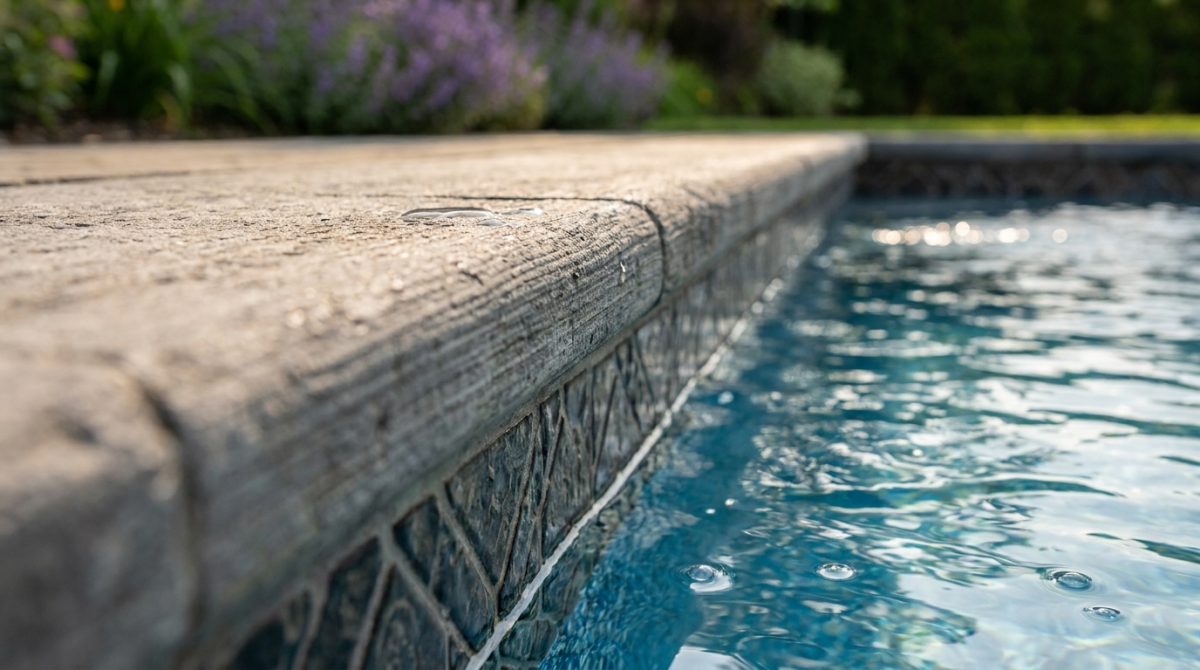
Leisure Pools’ range illustrates how far the design palette has expanded. Models like the Elegance and Reflections series can be specified across a range of gelcoat colour finishes, with options including deep blues, ocean tones, and lighter silver whites that change the visual character of the water entirely. This moves pool aesthetics from a utility product toward something closer to a considered piece of landscape architecture, where the colour and form of the pool is chosen with the same deliberateness as the materials used for the surrounding terrace or the house itself. If you want to explore how composite pool design has evolved further, the specifics go deeper than most buyers expect.
The integration of technology into the shell itself is another significant shift. LED lighting packages, in-floor cleaning systems, and water features including blade falls and deck-level jets can all be factory-specified into a composite shell during manufacture. This matters structurally. Retrofitting these features into a pool that was not designed for them risks penetrating the shell, introducing potential failure points, and voiding warranties. Factory integration avoids all of that.
Pool enclosures have developed in parallel. Retractable structures from manufacturers compatible with Swimpools’ installations have moved well beyond the low dome-style covers of the previous decade. Contemporary designs sit low to the terrace, slide back completely, and are glazed to admit maximum light when closed. In UK conditions, a quality retractable enclosure extends the usable swimming season from the standard five or six summer months to nine or ten months of the year, which fundamentally changes the value calculation of pool ownership in a northern European climate.
Smart home integration is now a baseline expectation rather than a premium add-on. Wi-Fi enabled pump controls, automated chemical dosing systems, and app-based heating management are all available as specified options at the point of purchase. A buyer can monitor and adjust water chemistry, filtration run times, and water temperature remotely. For a family that uses the pool at weekends and wants it at a specific temperature when they arrive, automated heating scheduling makes that straightforward without running the system continuously through the week.
Running Costs, Energy Use, and the Case for Efficiency
The energy price rises that began in 2022 changed the conversation around pool running costs in the UK in a way that the industry had not seen before. Buyers who might previously have treated ongoing energy use as a secondary consideration started asking precise questions about annual bills before they would commit to a purchase. That shift accelerated the move toward thermally efficient pool types and equipment specifications, and it has permanently raised the standard for what a premium installation looks like.
The pool shell itself is the starting point. A composite shell retains heat meaningfully better than concrete. The fiberglass and composite layers act as an insulating barrier between the water and the surrounding ground, reducing the rate at which heat dissipates. Concrete, being a porous and relatively thermally conductive material, loses heat to the earth continuously. Over a UK swimming season, which typically runs from April through to September or October depending on the specification, that difference in heat retention translates into a measurable reduction in heating costs for a composite pool owner compared with an equivalent concrete installation.
Variable speed pumps are now the standard recommendation for any premium UK installation. A conventional single-speed pump runs at full power whenever it is operating, regardless of whether that level of flow is necessary. Variable speed models adjust their output to match the actual demand at any given time, whether that is circulation, filtration, or running a water feature. The energy saving is significant: variable speed pumps can reduce electricity consumption by up to 80% compared to single-speed equivalents across a typical operating cycle. For a pool running filtration for eight to ten hours a day, that reduction shows up clearly in monthly energy bills.
Air source heat pumps are now the preferred heating method for premium residential pools in the UK. When paired with an insulated composite shell, a quality heat pump can achieve a Coefficient of Performance (COP) rating of 5 or above in typical UK ambient conditions. In practical terms, that means 1 kilowatt of electrical input generates 5 kilowatts of usable heat output. No gas boiler or direct electric heater comes close to that ratio. On the fiberglass pool market, energy efficiency is increasingly cited as a primary driver of material choice, and the heat pump pairing is central to that.
Pool covers are often treated as an optional accessory, which misunderstands their actual function. In energy management terms, a pool cover is not a luxury item; it is a core component of a well-specified installation. A quality cover, whether manual or automatic, can reduce overnight heat loss by up to 70%. Evaporation is the single largest source of heat loss from an open pool surface, and a cover eliminates the majority of that evaporation completely. An automatic cover that can be deployed with a switch makes consistent use realistic rather than aspirational.
When all of these elements are combined correctly, the total annual running cost for a well-specified composite pool with a heat pump and variable speed pump in the UK can be kept within the range of 1,200 to 2,000 pounds for a standard residential size. That figure covers heating, filtration, and chemical management across a full year of operation. For a pool that provides year-round wellness use and represents a significant property improvement, that ongoing cost sits comfortably within the range of other premium home leisure expenditures. The efficiency case for composite over concrete, and for specified equipment over budget alternatives, is straightforward when the numbers are laid out plainly.
Navigating Planning, Building Regulations, and the UK Legal Framework
Planning permission is the question most prospective pool buyers raise first, and in most cases the answer is more straightforward than they expect. The majority of residential outdoor swimming pools in England and Wales fall under Permitted Development rights. This means that provided the pool is within the curtilage of a dwelling house and meets standard conditions around coverage of the plot, formal planning permission is not required. The excavation and pool shell installation itself, in most standard residential gardens, can proceed without a planning application.
There are important exceptions. If the property sits within a designated area, including a National Park, an Area of Outstanding Natural Beauty (AONB), a Conservation Area, or is a Listed Building, Permitted Development rights are either removed or significantly restricted. In these cases, a full planning application will be required before any work can begin, and local planning authority guidance should be sought early in the process, before design decisions are finalised. Getting this wrong creates the risk of enforcement action and the requirement to remove a completed installation.
Scotland and Northern Ireland operate under entirely separate planning frameworks. Householder permitted development rules differ between these jurisdictions, and buyers in those regions must confirm their specific local authority requirements before proceeding with any installation. Assuming that the rules that apply in England also apply north of the border or in Northern Ireland is a common mistake with real consequences.
Building Regulations are a separate matter from planning permission and apply regardless of whether planning consent is needed. Associated structures, including pool houses, retractable enclosures, and any electrical or drainage connections, all engage specific parts of the Building Regulations. Part P covers electrical safety in dwellings, and all electrical work associated with a pool installation must be carried out by a registered electrician operating under a recognised competent person scheme. Part H governs drainage, and any connection to the existing drainage system for pool emptying or backwash discharge must comply with those requirements.
A competent installer will manage the Building Regulations notification and sign-off process as part of the installation package. This is not something a homeowner should be navigating independently. Swimpools’ installation process includes coordination of all relevant compliance requirements, ensuring that the completed installation carries the correct certification and that no outstanding Building Regulations notices remain open on the property title.
On safety barriers and fencing, the UK position differs from countries like Australia, where pool fencing is a strict legal requirement for all residential pools. In England, Wales, Scotland, and Northern Ireland, there is currently no statutory mandate requiring private residential pool owners to install perimeter fencing. However, the practical situation is more nuanced than that single fact suggests. Many home insurers include pool fencing or barrier requirements as a condition of providing liability cover for properties with pools. Responsible installers, including Swimpools, will always recommend appropriate safety measures as part of the design process. Parents with young children should treat fencing not as a regulatory question but as an absolute practical necessity, regardless of what the law does or does not require.
How to Choose the Right Pool for a UK Garden and Lifestyle
Every conversation about a new pool should begin not with size or style, but with access. Before any discussion of depth profiles or finishes, a responsible installer will ask about the route a pool shell needs to travel to reach your garden. For one-piece composite pools, side access of less than 1.2 metres typically means a crane lift is required, and that needs to be identified and costed at the site survey stage, not discovered on installation day. Properties with narrow passageways, mature trees, or raised boundaries can all complicate delivery, and the logistics are very different from dropping in a flat-pack structure or pouring concrete on site.
Once access is confirmed, depth profile becomes the next decision, and it should be driven by how the pool will actually be used. A family leisure pool works best with a graduated depth running from around 0.9 metres in the shallow end up to 1.8 metres at the deep end, giving younger swimmers a comfortable zone without making the water feel intimidating. A pool intended for serious lap swimming needs a consistent depth of 1.8 to 2 metres across at least 12 metres of length so that turns and stroke technique are not disrupted by a shelving floor. Getting this wrong at the specification stage means living with a compromise for decades, so it is worth being honest about how the pool will genuinely be used rather than defaulting to a showroom configuration.
Orientation and Solar Gain
In Spain or Portugal, pool orientation is a secondary concern because ambient heat does most of the work. In the UK, it matters considerably more. A pool positioned to face south or south-west will collect meaningful passive solar heat across the spring and autumn shoulder seasons, reducing the load on your heating system and extending your usable swimming calendar without additional running costs. A north-facing pool, shaded for much of the day, will require proportionally more mechanical heating input to reach and hold the same water temperature. This is not a reason to avoid a north-facing installation, but it should inform your heating system specification and your running cost expectations from day one.
Reading a Specification Sheet Properly
Headline price comparisons between pool types are almost never like-for-like, and this is where many buyers come unstuck. A quote for a composite pool, a concrete pool, and a vinyl-liner pool will arrive with very different assumptions baked in about surface finish lifespan, pump energy ratings, filtration capacity, and warranty coverage. Before comparing any figures, ask each supplier for a full specification sheet covering:
- Shell construction material and layer composition
- Surface finish type and expected lifespan before remediation is needed
- Pump and filtration energy ratings (look for IE3-rated motors as a minimum)
- Warranty terms, specifically what is covered, for how long, and whether it is transferable to a future buyer
Without this information presented consistently, you are comparing different products at different total lifecycle costs and treating them as equivalent. A composite shell with a lifetime structural warranty and a surface rated for 15 or more years without refinishing is a fundamentally different investment from a concrete pool that may require acid washing, replastering, or liner replacement within the same timeframe.
The Soil Survey Is Not Optional
UK soils vary enormously, and clay-heavy ground, which covers large parts of the Midlands, South East, and East Anglia, behaves in ways that directly affect pool installation. Clay expands when wet and contracts when dry, and a pool shell installed without appropriate backfill protocols and ground preparation in clay soil is at risk of movement after installation. A responsible installer will carry out a soil survey prior to quoting, specifying the correct backfill material, drainage provision, and any necessary ground stabilisation work. Any contractor who quotes for an installation without first visiting the site and assessing the ground conditions is not offering a complete service, regardless of how competitive the headline figure appears.
This is one of the clearest reasons to work with a specialist distributor like Swimpools rather than a general building contractor who may treat a pool as simply another groundworks project. When pool design, groundworks specification, filtration sizing, and heating system selection are handled by a single specialist team from the outset, everything is integrated. Each element is sized and specified in relation to the others. When those elements are assembled from separate subcontractors without a coordinating specialist, gaps in responsibility tend to appear, usually at exactly the point where one trade’s work ends and another’s begins.
The pool you choose will still be in your garden in twenty or thirty years. Spending adequate time on the specification stage, with the right people, on the actual site, before any money changes hands, is not caution for its own sake. It is how a long-term investment gets made well.