
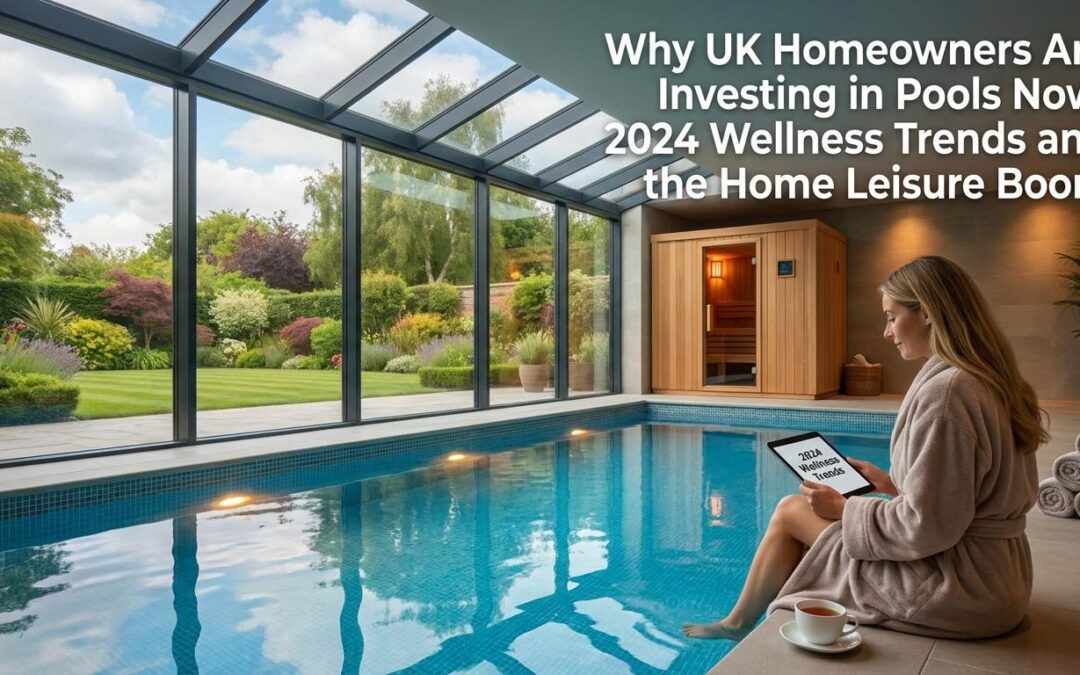
Search interest in home swimming pools does not build like this without something structural happening underneath. A reported surge of around 184% in UK homeowner queries about home pools is not a blip caused by a single hot weekend. It is the visible tip of a longer shift in how British households think about where they spend their money, their time, and their energy.
That shift has been building since 2020, but 2024 is the year it has moved from a niche signal into something that pool retailers, property valuers, and wellness brands are all responding to at the same time. Understanding why requires looking at three things together: the wellness culture that has redefined leisure spending, the property logic that makes a pool a rational investment, and the manufacturing progress that has made premium installation more accessible than at any previous point.
A Nation Rethinking What Home Should Feel Like
The 184% rise in pool-related searches among UK homeowners is striking, but it does not come from nowhere. It is the cumulative result of a reorientation in priorities that began in earnest during 2020, when being at home stopped being a temporary state and became the full context of daily life. Rightmove and Zoopla both recorded record searches for outdoor space, gardens, and leisure features during that period, and what the data shows clearly is that the appetite did not retreat when restrictions lifted.
Homeowners who spent two years making their gardens work harder have continued doing so. A decking area leads to an outdoor kitchen, an outdoor kitchen raises the question of what else the space could hold, and for a growing number of households in the 35 to 60 age bracket, the answer has become a pool. The logic compounds: once outdoor space is already being invested in, a pool shifts from fantasy to feasibility.
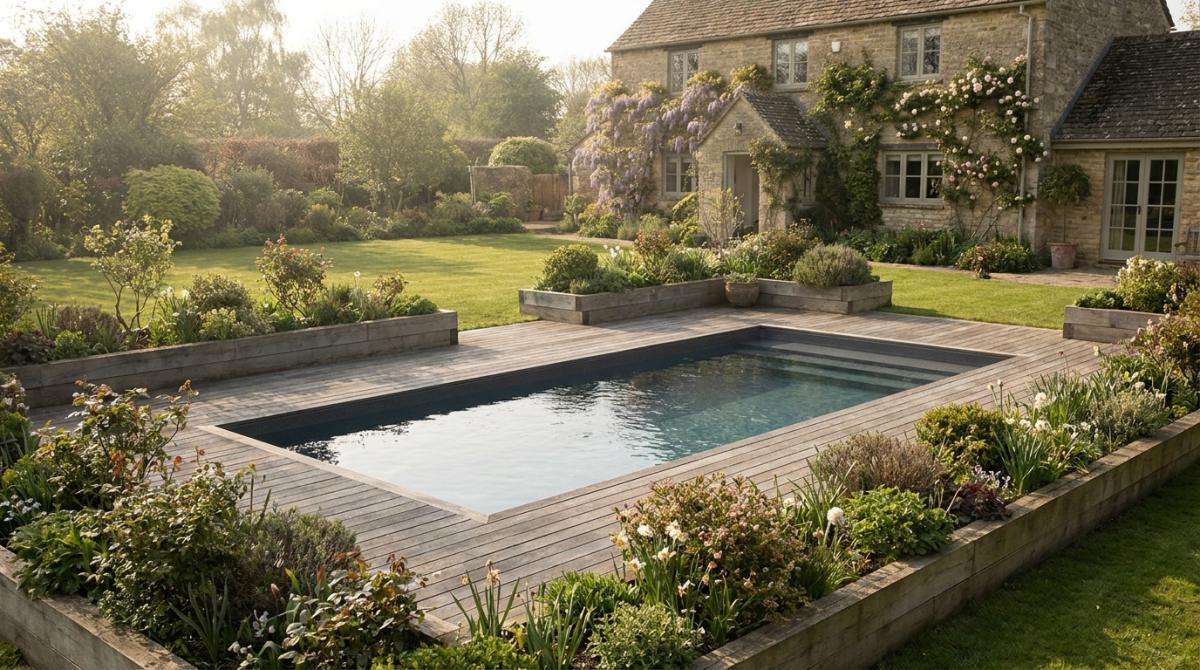
The ‘improve, don’t move’ mindset has become one of the defining financial behaviours of the post-pandemic homeowner. Rather than selling and trading up to a larger property, households are investing in the home they already have. Loft conversions, garden studios, kitchen extensions, and increasingly, swimming pools are where that capital is going. The UK Construction Blog noted in 2026 that this pattern has been consistent and accelerating, with pools sitting alongside kitchens as the highest-aspiration category in home improvement spend.
This article works through the full picture: the wellness economy that has put health infrastructure in the back garden, the sales data that shows 2024 as a watershed moment, the manufacturing advances that have changed what composite pools can deliver, and the practical realities of ownership from installation through to running costs. The goal is to give UK homeowners the context they need to assess whether a pool is the right decision for their property in 2024, not just a compelling one.
The Wellness Economy Has Moved Into the Back Garden
The global pool and spa market is forecast to grow significantly through 2036, driven not by commercial construction but by rising residential demand for health and wellness infrastructure. This is a consumer category that has repositioned itself. A pool is no longer marketed primarily as a luxury status item. It is marketed, and purchased, as a long-term wellness asset.
That repositioning has real foundations. Swimming is consistently cited by the NHS and leading sport bodies as one of the most complete low-impact exercises available. It delivers cardiovascular conditioning without the joint stress of running, builds functional strength across the full body, and has well-documented benefits for mental health. For households with older family members managing arthritis or joint conditions, access to a private pool for daily hydrotherapy is not a lifestyle indulgence but a practical health solution.
The post-pandemic arithmetic has shifted noticeably on this point. A premium gym membership in London costs between £80 and £200 per month. A family of four holding multiple memberships across a decade is looking at a cumulative spend that begins to approach the cost of a permanent home amenity. Consumers started doing that calculation, and pool retailers started hearing it back from buyers as a direct justification for purchase. The framing moved from ‘can we afford a pool’ to ‘can we afford not to have one given what we are spending elsewhere on fitness.’
Cold-water therapy and hydrotherapy have accelerated this further. What were once specialist recovery tools used by professional athletes and elite sports programmes have entered mainstream health culture with considerable speed. The appetite for cold plunge routines, contrast therapy, and structured aquatic exercise has grown a substantial consumer base that actively wants private water access rather than shared public facilities.
That last point matters because of a specific structural gap that has opened in the UK. The Leisure DB State of the UK Swimming Industry Report 2024 highlighted that public pool closures across the country have reduced accessible community swimming infrastructure. Local authority budget pressures have resulted in a real reduction in available lanes and sessions for recreational swimmers. For health-conscious households who swam regularly at a public pool, the closure or degradation of that facility becomes a direct prompt to consider private provision.
The wellness trend and the public pool closure issue are reinforcing the same conclusion from opposite directions. One is pulling consumers toward private pool ownership as an aspirational health choice; the other is pushing them toward it as a practical one. A household that loses access to its local pool and is simultaneously surrounded by messaging about cold-water therapy, daily swim routines, and hydrotherapy is a household that has moved from vague interest to active research, which is precisely where those search figures are coming from.
It is also worth noting that the wellness category as a whole has expanded the definition of who a pool is for. A decade ago, the dominant image of a residential pool buyer was specific and narrow. Today the buyers requesting quotes include households motivated by physical rehabilitation, families prioritising active outdoor time over screen time, and couples in their fifties who are rethinking how they want to structure retirement-adjacent years. The market has broadened, and the motivations have deepened beyond aesthetics.
What the Sales Data Actually Shows in 2024
Anecdotal enthusiasm about wellness trends and lifestyle shifts only tells part of the story. The harder data from 2024 points to something more concrete: a market that has moved from rising interest to active purchasing at a pace that surprised even industry insiders.
Compass Pools UK reported a 30% increase in sales during a record-breaking warm spring, an increase that came on top of already-elevated baseline demand. The significance of that figure is not just the number itself but what it demonstrates about the relationship between weather catalysts and structural demand. A warm spring does not create the desire for a pool from nothing. It acts as a trigger on a decision that was already forming, pushing households from research mode into purchase mode. The underlying pipeline of interested buyers has to already be there for a weather event to produce a 30% sales uplift.
The Richmond and Twickenham Times report on the 184% surge in pool searches is best understood in that same context. Search volume typically precedes purchase decisions by six to eighteen months in a category like this, where the average project involves significant planning, site assessment, and financing consideration. That means the search surge visible in the data is not reflecting people who just bought a pool. It is reflecting the cohort that is currently working toward buying one, which has substantial forward implications for sales volumes through 2024 and into 2025.
The European market context is useful here too. Germany held over 15% share of the European swimming pool and spa market in 2023, reflecting its mature and high-penetration residential pool culture. The UK has historically lagged behind France and Germany in pool ownership rates, in part due to climate perception and in part due to higher traditional installation costs. Both of those barriers have weakened: the climate argument is harder to sustain as British summers become more reliably warm, and composite and fibreglass technology has reduced both the cost floor and the installation complexity of premium pools substantially.
Industry analysts at GM Insights and Fact.MR have both pointed to rising disposable incomes and premium home improvement spending as the structural driver behind the European and UK growth trend, not seasonal weather alone. The 35 to 60 age bracket that makes up the core buyer profile in the UK is a demographic that holds significant home equity, has typically reduced its dependence on mortgage-heavy financing, and is at a life stage where quality-of-life investment competes directly with other large discretionary purchases. A pool at this life stage often replaces a more expensive holiday or a car upgrade rather than being an addition to an already-stretched budget.
What the combined data picture shows is a market moving from aspiration to active purchase intent. Search volumes are high and building. Sales figures from UK retailers confirm conversion is following. Premium pool ownership in the UK is not tracking toward a speculative future boom. The boom is already visible in the numbers that 2024 is producing.
From Surrey to Scotland: The Regional Spread of Pool Ownership
The assumption that residential pools belong exclusively to the Home Counties has been stubborn, but 2024 sales data is making it harder to sustain. Growth in new pool installations is tracking across the Midlands, the North West, and Scotland in a way that would have seemed unlikely a decade ago. The stockbroker-belt postcode is no longer the defining geography of pool ownership in the UK.
Rightmove and Zoopla data show that property searches filtering for pools or outdoor leisure features are rising in regional cities including Leeds, Manchester, and Edinburgh. Buyers in those markets are applying the same logic as their southern counterparts: outdoor space with a usable leisure feature is a differentiator, and they are willing to search specifically for it.
The climate argument against northern pools has also weakened considerably. Summer daylight hours across the UK are longer than many homeowners realise, and enclosure technology has transformed what counts as a usable season. A well-specified heated pool inside a polycarbonate or glass enclosure in the Scottish Central Belt can be swum in from April through October without any particular hardship. That is a meaningful number of months, not a novelty.
Planning permission is another barrier that turns out to be less formidable than most homeowners assume. The majority of residential pool installations fall within permitted development rights, meaning no formal planning application is required. There are exceptions, particularly for listed buildings, properties within conservation areas, or certain flatted developments, but for a standard detached house with a rear garden, the planning process is rarely the obstacle people fear.
Swimpools serves customers across the full breadth of the UK, from the south coast to the Scottish Highlands, and the regional enquiry pattern is shifting noticeably. This is not a niche southern premium phenomenon edging marginally outward. It is a genuine market shift, driven by the same wellness priorities and ‘invest in the home’ logic that is reshaping how homeowners across the country think about their properties. The geographic spread of demand matters because it reflects how mainstream premium pool ownership is becoming.

How a Pool Actually Affects Your Property Value
The financial case for a pool is more concrete than the lifestyle argument, which is worth stating plainly. Research from Ruby Home indicates that a well-installed swimming pool can increase residential property value by up to 7%. On a property valued at £800,000, that is a potential uplift of £56,000. The figure is not guaranteed and depends heavily on execution, but it establishes that a pool is a capital asset, not purely a lifestyle expense.
The 2020 period was a turning point for how buyers search for properties. Rightmove and Zoopla both reported record searches for gardens, outdoor entertaining areas, and leisure features during that period, and the appetite has not retreated. A pool does not just appeal to buyers who already swim. It signals a category of home, and that signal has measurable value in competitive markets.
Integration matters significantly to how much value a pool adds. A pool that dominates a small garden, sits without landscaping, or feels like an afterthought to the house will not return the same uplift as one that is designed as part of the property’s outdoor living space. Paired with quality paving, planting, and an enclosure that extends the usable season, the pool becomes part of a coherent proposition rather than a standalone feature.
What makes a pool specifically valuable compared to other home improvements is the category of amenity it creates. A buyer can renovate a kitchen after purchase. They can repaint, recarpet, or refit bathrooms. They cannot easily add a pool once they have moved in, at least not without significant disruption and cost. That asymmetry gives a pool genuine differentiation value in a way that most finish-level improvements do not.
The ‘improve, don’t move’ logic is also compelling when you run the actual numbers. Stamp duty land tax on a property trade-up in England can run to tens of thousands of pounds before moving costs, estate agent fees, and legal charges are added. A premium composite pool installation frequently costs less than a full property transaction, and it does not require you to leave a home you already like. For homeowners who want more from their property without the disruption of moving, the pool is often the better capital allocation.
Pools that come with lifetime structural warranties carry an additional advantage when it comes time to sell. Leisure Pools’ composite shells, distributed in the UK by Swimpools, come with a lifetime structural warranty that transfers to subsequent owners. When a buyer’s solicitor asks about the pool during conveyancing, a transferable lifetime warranty is a specific and reassuring answer. It removes a common source of buyer hesitation and positions the pool as a known-quality, maintained asset rather than an unknown liability.
Composite Technology Has Changed What Is Possible
The way a pool is built shapes almost everything about owning it: the disruption during installation, the maintenance time and chemical cost over years, the long-term structural integrity, and what a future buyer will make of it. That is why the shift towards composite fibreglass construction matters beyond marketing language. It changes the practical experience of pool ownership in ways that are verifiable and specific.
The Problem with the Old Methods
Traditional concrete pools remain common, particularly in older installations, and they have real advantages in terms of shape flexibility. But they also come with a set of constraints that composite construction sidesteps entirely. A concrete pool typically requires six to twelve weeks of on-site construction, significant civil groundworks, and specialist labour throughout. Once built, the surface will need resurfacing every ten to fifteen years, which is not a trivial cost or a minor inconvenience: it means draining the pool, applying new plaster or render, and potentially repainting. Vinyl liner pools avoid some of those issues but introduce others, including liner replacement costs and the visual limitations of a stretched membrane finish.
Composite fibreglass pools from manufacturers like Leisure Pools are a fundamentally different proposition. The shell is factory-manufactured in a controlled environment, arrives on site complete, and is typically installed and swim-ready within two to four weeks of delivery. That compression of the installation timeline is significant for homeowners who want minimal disruption to their garden and household.
How the Leisure Pools Construction Method Works
Leisure Pools uses what it calls the Aquaguard 5 Star Composite Armour system, a layered construction process that combines multiple types of fibreglass with a high-quality gelcoat finish. The result is a shell that is structurally stronger than conventional single-skin fibreglass pools, which are sometimes perceived as the weaker option in the composite category. The layering process is done in a factory environment where temperature, humidity, and application consistency can be controlled, not on a building site in November.
The gelcoat surface that faces the water is non-porous. This is a practical advantage that compounds over the life of the pool. Algae adhere to surfaces; the less surface texture there is for algae to grip, the less it can establish. A concrete pool’s rough, porous surface is essentially a habitat for algae and bacteria, which is why concrete pools typically demand more chemical treatment and more frequent cleaning. A composite pool with a smooth gelcoat surface resists adhesion, meaning the water chemistry is easier to maintain, chemical consumption is lower, and the time spent scrubbing walls is reduced. For an owner who wants to swim in their pool rather than manage it, that difference matters weekly.
Factory manufacture also removes a variable that concrete pools are entirely subject to: contractor quality and site conditions. A composite shell is produced to a consistent specification regardless of whether it is raining during installation week or whether a subcontractor has called in sick. The finish quality, wall thickness, and structural integrity are set before the pool leaves the factory. Automated composite production is what makes that consistency possible at scale.
The Warranty as a Differentiator
Leisure Pools offers a lifetime structural warranty on its composite shells. This is transferable to subsequent owners, which means it has value both to the original purchaser and to anyone who buys the property later. In a market where cheaper import alternatives are available, the warranty is a meaningful distinction. An imported pool shell with no structural guarantee is a risk that compounds over years. A Leisure Pools shell with a transferable lifetime warranty is a documented quality commitment that survives a property transaction.
Taken together, the faster installation timeline, the lower chemical and maintenance demands of the gelcoat surface, the structural strength of the layered composite construction, and the lifetime warranty form a coherent package. It is the combination of these factors, not any single one in isolation, that explains why composite technology is driving the 2024 UK growth surge rather than simply participating in it. Homeowners who are doing serious research on pool ownership consistently land on composite as the category that resolves the objections that used to make a pool feel impractical.
Designing for the UK Climate: Enclosures, Heating, and Year-Round Use
The most common reason UK homeowners hesitate before committing to a pool is the weather. It is a fair concern, and it deserves a direct answer. Without the right specification, a pool in the UK sits empty or underused for the better part of eight months. With the right combination of heating technology and enclosure, that picture changes completely.
A quality air-source heat pump is the foundation of any year-round pool plan. Modern inverter-driven units achieve coefficients of performance (COP) of between 5 and 7 in typical UK ambient temperatures, which means for every unit of electricity consumed, the pump delivers five to seven units of heat energy to the water. That makes them dramatically cheaper to run than gas heating, and capable of maintaining water temperatures at a comfortable 28 degrees Celsius even through the cooler shoulder months of spring and autumn.
Solar covers and thermal blankets are the next layer. A good quality solar blanket laid across the water surface overnight can reduce temperature loss by several degrees, cutting the work the heat pump has to do the following morning. When you are running a heat pump on a time-of-use electricity tariff and combining it with a thermal cover, the overnight heat loss problem largely disappears. These covers cost a few hundred pounds and the payback through reduced heating bills is measurable within a single season.
Enclosures are where the year-round use question gets genuinely resolved. The range available has improved significantly, and the notion that a pool enclosure has to be an imposing greenhouse structure is outdated. Low-profile telescopic models sit close to the pool surround and slide back on warm days to give you an open-air experience, while fully glazed year-round structures create what is effectively a swim room that can be used regardless of what is happening overhead. In most cases these structures fall within permitted development rights and do not require a planning application, though it is always worth confirming this with your local authority at the design stage.

Swimpools offers enclosure options from leading European manufacturers, with designs selected to sit within the garden rather than dominate it. The emphasis is on structures that complement the architectural language of the property and the planting scheme around the pool, rather than treating the enclosure as a purely functional afterthought.
The combined effect of all these elements is significant. An unheated, uncovered outdoor pool in the UK is realistically usable for around eighteen weeks per year, typically from late May to early September. A pool with a well-specified heat pump, a thermal cover for overnight retention, and a quality enclosure extends that to forty weeks or more, covering most of the calendar year. That transformation in usability changes the value calculation for the installation entirely. A pool used across ten months of the year is a fundamentally different asset to one that sits cold and covered for half the time.
The correct specification for heating and enclosure depends on pool size, orientation, the degree of natural shelter the site provides, and how the homeowner intends to use the pool. Getting those variables right at the design stage, rather than retrofitting equipment later, is precisely where working with a specialist retailer rather than a generalist builder makes a measurable financial difference.
The Range That Meets the Surge in Demand
Swimpools distributes Leisure Pools across the UK, and the catalogue is one of the reasons composite pools have gained so much traction with homeowners who previously assumed they would need a bespoke concrete build to get exactly what they wanted. The range spans compact plunge and lap pool configurations suited to urban gardens with limited footprint, right through to large family leisure pools designed for country properties where space and budget allow for something more generous.
Different models are engineered for different primary uses. The Leisure Pools Sanctuary series, for example, prioritises a deeper, calmer profile with integrated seating zones suited to hydrotherapy use and social swimming. The Reflection series takes a different approach, with clean geometric lines and a shallower gradients that suit families with younger children or homeowners whose priority is aesthetics and landscape integration over dedicated lap or therapy use. Neither is better in absolute terms; the right choice depends on what the pool is actually for.
Colour plays a larger role in the finished look of a pool than many first-time buyers expect. The Aquaguard gelcoat system used by Leisure Pools is available across a palette that runs from classic white and crystal blue finishes through to contemporary deep blues and grey-toned options. Those darker tones in particular suit the clean lines of modern landscape architecture, where a pool with a charcoal or slate-effect finish reads as a design feature rather than a utility installation. The gelcoat is applied as an integral part of the composite shell manufacturing process, which means the colour is structural rather than a surface coating that can fade or chip independently.
Optional equipment allows a single shell to serve several different wellness functions without requiring separate installations. Integrated LED lighting transforms the pool for evening use and can be specified in colour-changing configurations. Swim jets fitted into the pool wall create a resistance current for fitness swimming without the pool needing to be a full 25-metre lane. Hydrotherapy seat jets target specific muscle groups and turn a family pool into something that functions like a spa at the end of the day. These are not gimmicks; they are the features that determine how often different members of a household actually use the pool across the year.
The breadth of this catalogue matters in practical terms. When the UK residential pool market was dominated by bespoke concrete builds, a homeowner who wanted a compact pool in a specific colour with particular built-in features was committing to a long and expensive custom engineering process. Composite manufacturing means those combinations exist off the shelf, which reduces lead times, reduces cost, and reduces the uncertainty in the finished result. You are not guessing at what the pool will look like; you are selecting from a proven range.
Swimpools provides detailed specifications for every model and supports the selection process with 3D visualisation tools that show exactly how a chosen pool will sit within a customer’s actual garden dimensions. That step, reviewing a photorealistic render of the finished installation before any ground is broken, removes a significant source of pre-purchase anxiety and tends to accelerate the decision-making process once homeowners can see the result clearly. You can explore the available Harmony range on the Swimpools site to get a sense of how detailed those product pages are before booking a consultation.
Financing a Premium Pool: What UK Homeowners Are Actually Spending
The starting point for most conversations about pool installation costs is around 25,000 pounds. At that level you are looking at a compact composite pool, fully installed, with basic heating and filtration. That figure rises steadily as pool size increases and as additional elements are added to the specification. A large leisure pool with a quality enclosure, a heat pump system, LED lighting, and professional landscaping of the surrounding area will typically land somewhere between 60,000 and 80,000 pounds, sometimes more on complex sites or with high-specification ancillary features.
Those numbers prompt homeowners to consider how the expenditure sits alongside other capital uses. The most useful comparison is not against alternative luxury purchases but against the financial mechanics of moving house. Stamp duty land tax at current rates on a property transaction of 800,000 pounds alone amounts to tens of thousands of pounds, before legal fees, survey costs, and the disruption of actually moving. The UK Construction Blog notes that the improve-not-move calculation has become especially compelling given the current cost of moving, and a pool installation fits squarely within that logic for homeowners who are happy with their location but want more from the property itself.
Most homeowners financing a pool are using one of two mechanisms. Secured home improvement loans drawn against existing equity are the most straightforward route, with rates broadly in line with standard mortgage products depending on the lender. Remortgaging to release equity is the second common approach, often timed to coincide with a fixed-rate renewal when there is no early repayment penalty to consider. A smaller number of specialist lenders offer products specifically structured around home leisure improvements, though these are less widely available than standard secured lending.
When the total cost of a mid-range installation, say 45,000 pounds, is spread over a twenty-year ownership period, the annual capital cost works out at around 2,250 pounds. For a household of two or three people, that is broadly comparable to a premium gym membership, with the difference that the pool is available at any hour, requires no travel, and contributes to the resale value of the property rather than disappearing entirely as a sunk cost.
VAT is charged at the standard 20 percent rate on residential pool installations. Homeowners with accessibility requirements, for example a pool specified to support rehabilitation or to assist a household member with a disability, should discuss with their installer whether any elements of the specification qualify for the reduced 5 percent rate. This is not automatic and depends on how HMRC classifies the specific adaptations, but it is worth raising the question before contracts are signed rather than afterwards.
Running costs are a part of the total ownership model that some buyers underweight during the purchase decision. Annual costs for chemicals, heating, routine maintenance, and occasional equipment servicing on a mid-size pool with a heat pump system typically run between 1,500 and 2,500 pounds per year depending on usage, pool size, and how well the enclosure and thermal cover are used to reduce heat loss. Swimpools recommends building a full cost of ownership model before comparing a pool against other capital uses, incorporating installation cost, annual running costs, and the expected effect on property value, so that the decision is based on realistic numbers rather than headline installation figures alone.
Installation Reality: What the Process Looks Like From First Call to First Swim
One of the things that puts homeowners off starting the conversation is not knowing what they are committing to. The installation process feels abstract until someone walks you through it step by step. In practice, a composite pool installation is far more straightforward than most people expect, and the timeline is genuinely short compared to any alternative.
It begins before a single machine arrives on site. A detailed site survey assesses ground conditions, the access route for a crane or tracked excavator, existing drainage, and how close the proposed pool position sits to underground utilities. This survey determines whether a standard installation is feasible or whether additional groundworks, such as rock breaking, soil stabilisation, or rerouting drainage, are needed. Getting this right at the outset prevents surprises mid-project.
Once the pool shell is manufactured and delivered, the physical installation follows a clear sequence. Excavation opens the ground to the correct depth and profile. A prepared base, typically compacted hardcore and a concrete blinding layer, gives the shell a stable, level platform. A crane then lifts the composite shell into position in a single piece, which is one of the practical advantages of this construction method over anything built in situ. Backfill material is packed around the shell, plumbing runs connect the pool to the plant room, and the electrical commissioning brings everything to life.
The Plant Room
The plant room deserves specific attention because homeowners sometimes underestimate its importance. This is the space that houses the filtration pump, heat pump, controller, and chemical dosing system. Its size and its proximity to the pool both affect how well the system performs and how easily a technician can service it. A cramped or badly positioned plant room makes routine maintenance more difficult and can restrict airflow to the heat pump, reducing efficiency. Planning its location carefully at the survey stage pays dividends for the life of the pool.
Most straightforward composite installations reach swim-ready status within two to four weeks of the shell arriving on site. That is not a marketing claim; it reflects the genuine advantage of working with a single-piece shell that arrives pre-formed rather than a concrete structure that must be built, cured, and waterproofed from scratch, a process that typically takes three to four months. For homeowners who want a pool in the water before a particular summer, that difference in timeline is significant.
It would be misleading, however, not to acknowledge the disruption that groundworks bring to a garden. Excavation machinery, spoil removal, delivery vehicles, and weeks of active building work will affect the surrounding area. Homeowners should plan for this and budget realistically for reinstatement of hard landscaping and planting around the pool perimeter once the installation is complete. The pool itself may be finished quickly; the garden coming back together properly takes a little longer.
Swimpools coordinates the entire installation process and provides commissioning support at handover. That means the water chemistry, equipment settings, heat pump parameters, and all safety features are correctly configured before anyone swims a length. The lifetime warranty on the Leisure Pools composite shell begins from the date of installation, and Swimpools provides full documentation that transfers to future owners if the property is sold. For a buyer considering the purchase of a home with an existing pool, that transferable warranty is a tangible reassurance that carries real value.
Running Costs, Maintenance, and What Owners Should Know Before They Buy
A pool is a long-term commitment, and the purchase price is only one part of the financial picture. Understanding the running costs before you buy means there are no unwelcome surprises in year two, when the novelty has settled into ordinary enjoyment and the bills are simply part of the household budget.
A realistic annual running cost for a mid-size composite outdoor pool with a heat pump, automatic chemical dosing, and a pool cover sits between £1,500 and £3,500 per year. The range is wide because the variables are real: how often the pool is used, how long the heating season runs, what energy tariff the household is on, and how well the cover is used all shift the number meaningfully. A household that swims daily from April through October, leaves the pool uncovered overnight, and is on a standard electricity tariff will sit toward the top of that range. A household that uses the pool mainly at weekends, covers it diligently, and has a smart energy tariff will sit closer to the bottom.
Heating: Why the Heat Pump Is the Right Choice
The heat pump has become the standard heating method for UK residential pools, and for good reason. At a coefficient of performance (COP) of 5, a heat pump delivers five units of heat energy for every single unit of electricity consumed. Compare that to a gas heater, which converts energy at roughly one-to-one efficiency, and the operating cost difference over a full season becomes substantial. Modern air-source heat pumps designed for pools operate effectively down to ambient temperatures of around 7 degrees Celsius, which in UK conditions means a meaningful extension of the swimming season without a proportionate increase in running costs.
Chemical Management
Manual testing and dosing of pool water is the maintenance task that new owners underestimate most. Automatic chemical dosing systems remove almost all of that burden. Probes continuously monitor pH and free chlorine levels in the water and dispense exactly the chemicals needed to maintain balance, nothing more. The result is better water quality, lower chemical spend over the course of a season, and far less time crouching by the pool edge with test strips. For busy households, the investment in an automatic dosing system pays back quickly in time alone.
The non-porous composite surface of a Leisure Pools shell also contributes here. Algae and bacteria need surface texture to establish. A smooth composite surface gives them far less to cling to compared to the porous surface of a concrete pool, which means fewer chemical shock treatments, less scrubbing, and a generally lower maintenance burden across the season. It is a practical benefit that compounds over years of ownership.
Annual professional servicing typically costs between £200 and £500 from a qualified pool technician. This visit covers pump and filter inspection, seal checks, water chemistry calibration, and a general health check of the equipment. Staying on top of this annually is far less expensive than dealing with a pump failure or a water chemistry problem that has been allowed to develop unchecked.
One area homeowners sometimes overlook entirely is insurance. Most UK insurers will cover a swimming pool under buildings insurance, but some require explicit notification when a pool is installed. More importantly, third-party liability cover matters for any household that entertains visitors who may use the pool. Checking the policy before the pool is commissioned, rather than after, takes a single phone call and removes a meaningful risk.
Making the Decision: How to Know If a Pool Is Right for Your Property in 2024
Most homeowners who end up with a pool will tell you that the decision was not made in a single moment. It accumulated. A summer that felt too hot to enjoy without water. A weekend drive past a house with a pool and a sense of genuine envy. A conversation about what the household actually does together. Eventually the question stops being hypothetical and becomes practical: is this right for our property, and is now the right time?
There are four questions worth answering honestly before you move forward. Does the garden have sufficient space and a viable access route for installation machinery? Is the household’s primary motivation wellness, family leisure, or both, because that shapes the model and size decision? What is the realistic total budget, including groundworks, landscaping, and the first two years of running costs? And how long does the household intend to stay in the property?
On space, the numbers are more accessible than many people assume. A garden of roughly 10 metres by 6 metres can accommodate a meaningful compact pool with surrounding deck, enough for genuine lap swimming in a smaller model or active family use in a splash pool format. Larger leisure pools, the kind with integrated spas, beach entries, or swim jets, benefit from gardens of 15 metres or more in length. If you are unsure whether your garden qualifies, a site assessment will answer that definitively rather than leaving you guessing from a floor plan.
The tenure question matters more than it is often given credit for. Homeowners who intend to stay in the property for five or more years see the strongest return on the investment, measured both in quality of life over that period and in the property value argument at the point of eventual sale. A pool installed for a two-year stay before a planned house move is a harder case to make financially. A pool installed for a decade of family use, with the value uplift as a secondary benefit, is a straightforwardly good decision for the right household.
Swimpools offers a no-obligation consultation process that covers all of this before any purchase commitment is made. A site feasibility assessment, a model recommendation matched to your use case and garden dimensions, and a detailed cost breakdown covering installation, equipment, and ongoing running costs. The point is to arrive at a clear picture rather than a vague aspiration.
One practical note for anyone reading this with a summer 2025 installation in mind: lead times on popular Leisure Pools models have lengthened as demand has grown. Beginning that conversation in late 2024 is not premature; it is the realistic way to secure availability for the season you actually want to swim in.
The broader context is worth stating plainly. The convergence of wellness culture driving genuine behavioural change, a property market that has learned to value outdoor leisure features, composite technology that has made pool ownership faster and more durable than it has ever been, and accessible financing options means that 2024 represents a structurally different moment for UK pool ownership than any previous decade. The homeowners who recognise that shift and act on it are not chasing a trend. They are making a considered decision at exactly the right time.